With more than 25,000 acres protected and major development pressures looming, Solano Land Trust leaders told business partners Thursday that the county’s future will hinge on balancing growth with preservation, warning that incremental land loss could erode the region’s agricultural economy even as open space remains abundant.
The assessment came during the Land Trust’s annual Business Partners Breakfast at Rush Ranch on Thursday morning, in which CEO Nicole Braddock updated attendees on its operations over the past year.
Braddock said she was pleased to see a full house for the event, thanking business partners for their direct support and for being ambassadors to the community for the land trust.
“You guys are huge partners in helping us do the work that we do on the land,” she said.
Braddock has been with the organization for 17 years and called it an interesting journey. She said some connections in the room reached back to the beginning of her tenure and further.
“This place is amazing because it really is a family, so for those of you who are new to the game, welcome to the family,” she said.
Braddock said that the organization has protected more than 25,000 acres over the years, and seeks to balance responsible development with land stewardship in the region. Active grazing is used to support the ecological health of the properties, she said, and many spaces protected by the Solano Land Trust are open to the public.
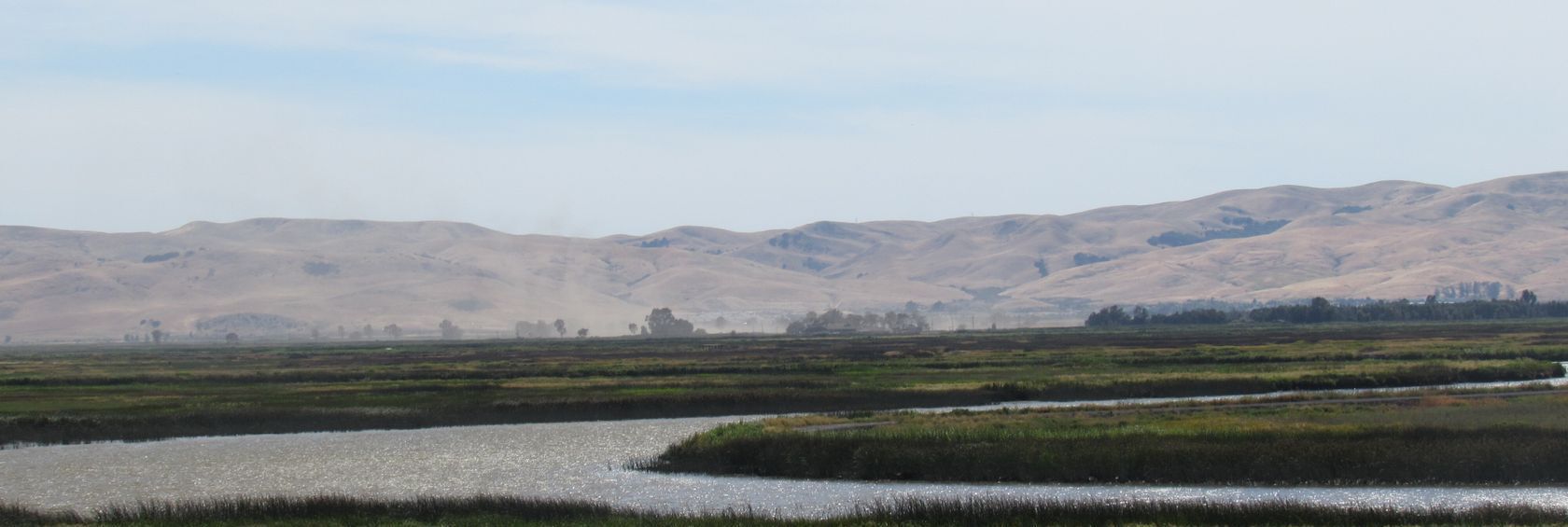
Many of the organization’s open spaces enjoy rich biodiversity, Braddock said, even ones that may not look like it on the surface. That includes Jepson Prairie, a site near California Forever’s proposed new community.
“It looks a little bit like a mud puddle, but it’s actually full of life,” she said.
Braddock referenced “extraordinary potential land use changes” in the county. She noted the Solano County Orderly Growth Initiative, which expires in 2028, as well as the upcoming General Plan Update.
“It’s one of those things that is happening in the background that not a lot of people pay attention to, and it drives everything,” she noted.
Mentioning Dixon’s possible 7,000-acre annexation, plus the nearly 70,000-acre holdings of California Forever, she said the county could look very different 15 to 20 years down the line.
“Fifteen percent of our county is owned by one land owner, so that is significant,” she said.
Earlier this week, California Forever CEO Jan Sramek said Solano County is 86 percent open space right now and even at full project buildout would only fall to 84 percent open space, still dramatically outpacing other counties in the region. Braddock said the Solano Land Trust looks to support continued farming in the region. She said she looks not at the percentage of land used for agriculture, but the health of the agricultural industry and farming economy in the county.
“When you look at Santa Clara County, or these counties where farming as an industry has basically ended, part of it was this death by a thousand cuts, where you’re just taking some land out of farming, you’re taking some land out of ranching,” she said.
Santa Clara County generated $371,525,000 in Gross Crop Value in 2023, according to the county’s annual agricultural report. Solano County generated $460,391,000 in the same year, a record high. Santa Clara County is about three-quarters rural, according to the most recently available U.S. Census data. About 43 percent of the county’s total landmass, over 362,000 acres, is preserved for agricultural or open space uses through Williamson Act contracts, according to the county’s Office of the Assessor.
Budget woes for Solano County’s cities are a factor driving development, Braddock said, as cities look for ways to widen their revenue streams through growth. She said the land trust has historically “stayed out of the policy stuff” but now wants to “support our community to think about how we can balance growth and development.”
“It’s not a no strategy,” she said. “We’re not saying that there is no growth.”
Another goal for Solano Land Trust is to model stewardship to balance inclusive recreation with conservation, Braddock said. She noted that Rush Ranch is well-positioned to absorb sea level rise without infrastructural impacts to human uses. She said restoration projects utilize “nature-based solutions” to mitigate sea level rise and lessen the pressure on the rest of the Bay Area.
Solano Land Trust also incorporated teacher feedback into its recent restoration project at Rush Ranch.
“Rush is already a living classroom, and we have kids out here all the time doing field trips,” she said.
Braddock mentioned the upcoming Rush Ranch Open House and Infinity Run on April 18 and the Lynch Canyon Kite Festival on May 16, both of which will begin at 10 a.m. and are open to the public.
Tracy Ellison, Conservation Director, showed a map with a variety of conservation easements totaling nearly 14,000 acres. She said other agencies also protect acreage in the county, and she noted five new conservation easements in the northern half of the county. Conservation easements extinguish development rights by transferring them to another party, in this case, the Solano Land Trust.
Laura Livadas, Development Director, said the breakfast is a good opportunity to connect with valuable business partners. She said it was special to celebrate the organization’s fortieth anniversary at Rush Ranch, its first-ever protected property.
“It goes without saying how much we value this land,” she said.
Livadas said there are many ways for business partners to support the organization’s work, including sponsoring events, donating goods for fundraisers, and working for the organization at no cost.
“Your commitment creates lasting impact, and we are truly grateful to have you by our side,” she said.
Link to PDF version of article here:
Solano Land Trust Hosts Partner Breakfast
Link to read article online here:
