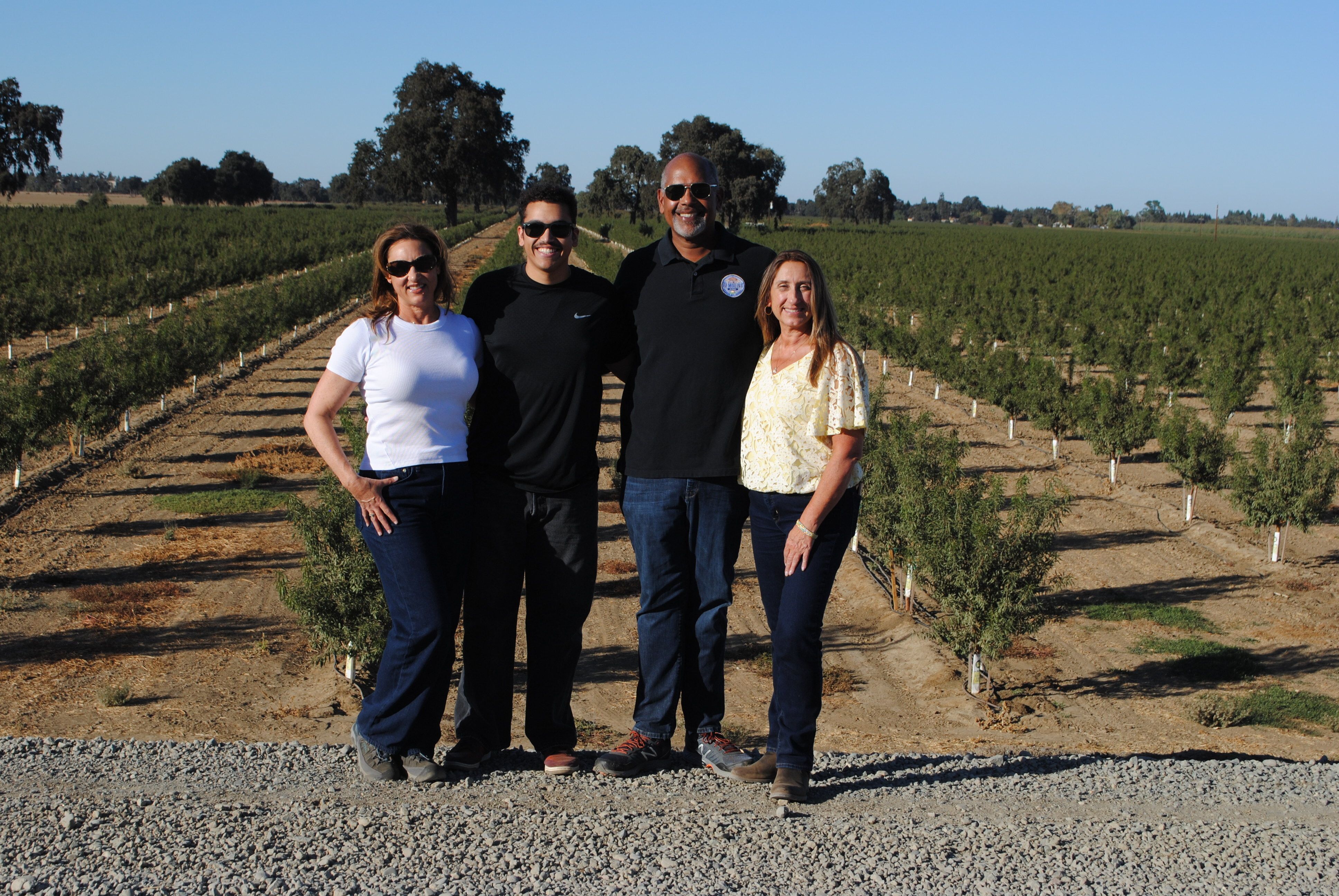
Solano Land Trust, the City of Davis, and the California Strategic Growth Council's Sustainable Agricultural Lands Conservation Program (SALC), administered by the California Department of Conservation , have funded and permanently protected El Molino Farms, a 217-acre farm near Dixon along the northern border of Solano County, through a conservation easement agreement recorded on September 30, 2026. The farm, newly planted with almonds, will remain privately owned, and its agricultural values conserved in support of agricultural production now, and for future generations, and the easement ensures it can never be subdivided or developed.
El Molino Farms is owned by Dr. Kevin Tyson and his family, who chose to place a conservation easement agreement on the land, so it will remain farmland for generations to come.
“We chose to conserve this land first and foremost because we don’t ever want to see it developed,” said Dr. Tyson. “It’s rare to find undeveloped farmland with soil this pristine and with such scenic qualities so close to the City of Davis. I’m happy to steward land so close to UC Davis, which enriched my life during my time there. Our family’s history in farming goes back generations, and our mission is to farm this land into the future.”
Long used to grow row crops like tomatoes and sunflowers, the farm began a new chapter in the last couple of years with the planting of an almond orchard. The easement permanently prevents subdivision and development while protecting the land's open space character, soil health, water quality, and capacity to store carbon. The easement allows the landowner to manage crop and irrigation decisions and to build one primary and one secondary home and any agricultural building like processing or barns to support the agriculture uses of the property, while following all local zoning regulations.
Protecting farmland from development also supports California's climate goals. SALC funds agricultural conservation easements to keep working lands from being converted to urban uses, avoiding the greenhouse gas emissions that come with sprawl.
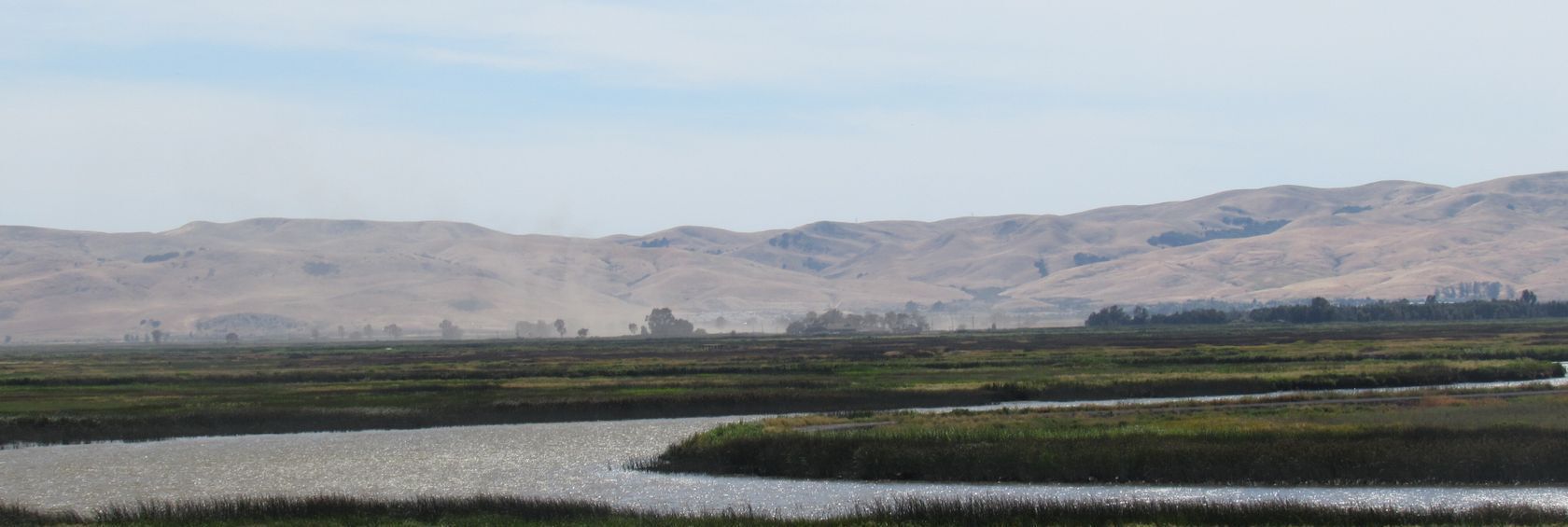
Putah Creek forms the boundary between Solano and Yolo counties, and El Molino Farms sits just across the creek from Davis. The City of Davis contributed funding through its open space program, which is supported by a special parcel tax paid by Davis residents.
"This purchase was a unique opportunity to protect the only remaining parcel that connects the old North Fork of Putah Creek to the South Fork of Putah Creek," said Mayor Donna Neville. "Without the special open space parcel tax funded by Davis taxpayers, the City would likely not have been able to help protect this spectacular piece of farmland and open space."
"Choosing to protect your land for its agricultural future is a monumental step for a landowner," said Tracy Ellison, Chief Programs Officer at Solano Land Trust. "Solano Land Trust is proud to facilitate that work alongside committed partners, showing just how much can be achieved when funding programs and partnerships form and local landowners all unite to preserve our region's working lands."
Funds for the El Molino Farms agricultural conservation easement were made available through the California Strategic Growth Council's Sustainable Agricultural Lands Conservation Program (SALC) managed by the Department of Conservation. SALC is part of California Climate Investments, a statewide initiative that puts billions of Cap-and-Invest dollars to work reducing greenhouse gas emissions, strengthening the economy, and improving public health and the environment – particularly in disadvantaged communities.
SALC funded $975,000 of the total easement; the City of Davis funded $130,000, and Solano Land Trust funded $195,000 from our internal agricultural mitigation fund.
The work upon which this publication is based was funded in whole or in part through a grant awarded by the California Department of Conservation.
