Kyle Elshoff, the first researcher to carry out a fungal diversity survey at Jepson Prairie Preserve, wants to fill a gap in the data.
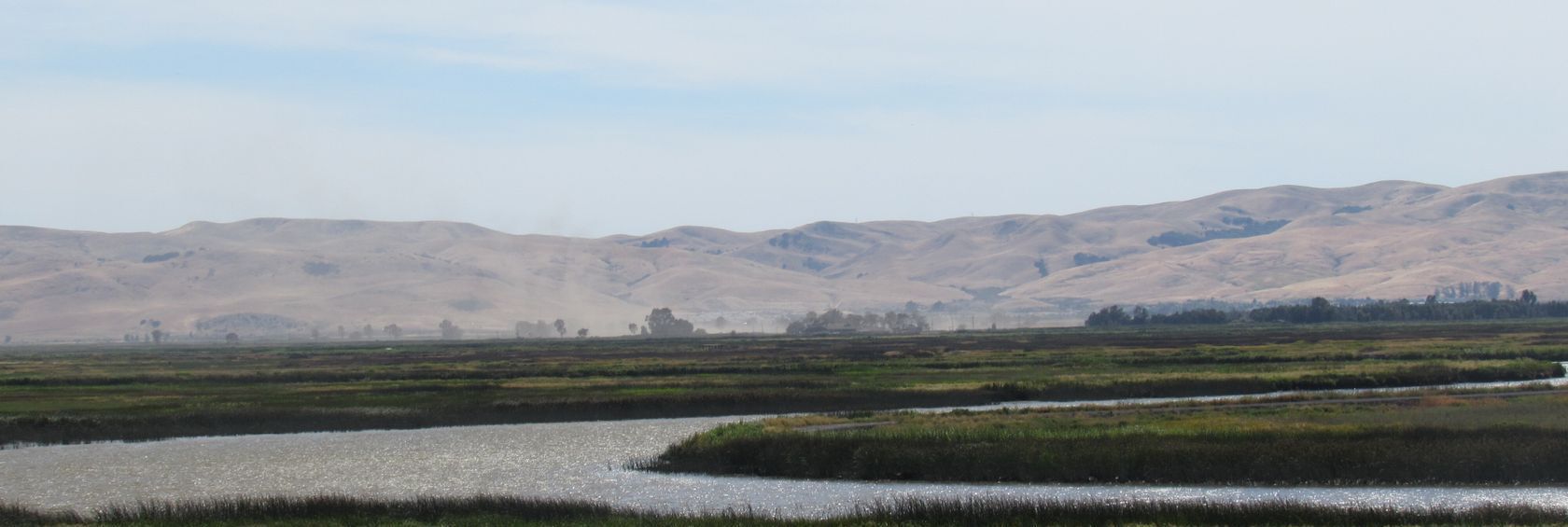
With good reason, much of the focus at Jepson Prairie Preserve is on the vernal pool ecosystem’s endangered wildflowers, grasses, and critters. Creatures like California tiger salamanders, vernal pool fairy shrimp, and Delta green ground beetles are often the reasons, against all odds, why lands are protected. Flora like Solano grass and the fragrant fritillary inspire awe. Recently though, Kyle Elshoff took it upon himself to shine a light on the lesser-known diversity of this biological hotspot.
Elshoff began his time as an undergrad at UC Davis studying entomology. “For my whole life I’ve been interested in all kinds of biodiversity,” he said. He worked for a year as a junior specialist at an insect population ecology lab. But an Intro to Mycology class with Dr. Dave Rizzo would alter his trajectory more than anything.
He started to learn how to collect and identify fungi. He attended a winter mushroom foray in Mendocino County, an event well-attended by area mycological societies and organizations. There, he met Dr. Brian Perry from CSU East Bay in Hayward. Perry runs a fungarium (dried fungi specimens), and would become an influential figure in his fledgling career.
Elshoff grew up in Santa Clarita but recalls visiting his grandparents in the Sierra Foothills for holidays. “While my family was inside,” he said, “I would spend Christmas outside looking for mushrooms.” His interests shifted from insects to fungi.
Around this same time, he joined The Davis Rewilding Society, a club started in 2021 by his friend Kees Hood. He eventually became a co-president from late 2023 until Spring of 2024 when he graduated with a BA in Evolution, Ecology, and Biodiversity. He expanded his love for conservation through this work. His friends took him to visit Jepson Prairie Preserve for the first time. “I was blown away,” he said.
Then early in 2025, Kyle attended the Tilden Fungus Fair. He ran into Dr. Perry again and learned about about the Fungal Diversity Survey (FUNDIS). This is an effort “dedicated to protecting biodiversity through the conservation of fungi and their habitats,” according to their site. It was around this time that Kyle began training to be a docent at Jepson Prairie and a lightbulb went off. Could he combine his new volunteer activities, this special place, and a passion for fungi? Yes.
He noticed that amidst all the research on Jepson Prairie, a fungal gap existed. Nobody had done a detailed survey of the fungi in this vernal pool
ecosystem. “Fungi are not a high priority as far as conservation goes,” Elshoff explained. If you were trying to keep a developer from building on a vernal pool ecosystem, for example, you might not earn broad public support by putting up a rare mushroom as your mascot. It is not as, well, charming, as a wildflower or critter.
There is also the matter of habitat. Based on the biology of fungi, a bulk of California’s fungal diversity is concentrated in forested areas. Many fungi have obligate relationships with trees. “Much of the focus is on those areas,” he said, “Not grasslands or vernal pool ecosystems.” Also, a significant part of the cycle of plants and animals being ignored: death. “Plants grow and then they die but what happens to the dead stuff? The fungi are the answer,” he said. Elshoff applied for a “California Species Collection” microgrant from the California Institute for Biodiversity. It’s managed through experiment.com, a scientific crowdfunding site, and ranges from $500-$2,500.
I learned about his project when he sent a fundraising email out to Jepson Prairie Docents, who are happy to see this work done. “Kyle’s project highlights the kind of opportunities we are able to foster,” said Jasmine Westbrook Barsukov, a project manager at Solano Land Trust. “Jepson Prairie Preserve is largely a research property. Members of the public are welcome to explore a small portion of the preserve, but the rest is open for habitat and research. Kyle came as a docent, saw a gap in our data, and founded an incredible project that will inform researchers throughout our region.”
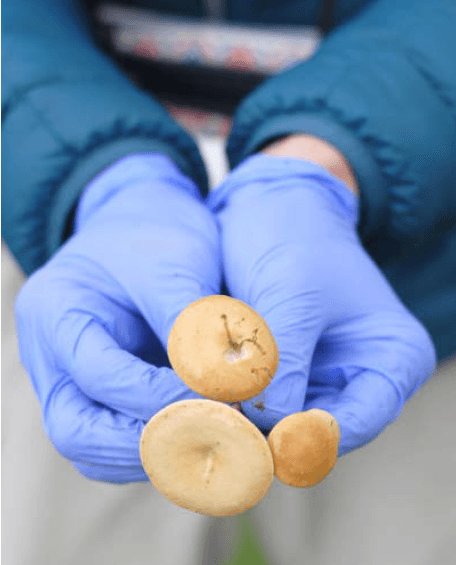
Elshoff ’s first collection was in October of 2025 and the project will carry on into the Summer of 2026. Most of the fungi observed will be in Winter but vernal pool plants produce some rust fungi which “look like pimples” in the dry season. At the time of this writing, Elshoff had collected more than 200 specimens of fungi and he expected at least 100 of them were unique. “I’ve collected all the fungi I can see with my naked eye,” he said. His goal is to catalog the specimens, make a species list, and hope that his work helps scientists glean a better understanding of the very pecial ecosystem at Jepson Prairie Preserve.
When this catalog is complete, Kyle’s specimens will be dried and sent to Dr. Perry’s fungarium where they will live out their dead days. Elshoff ’s glad to see this project through. He’s been applying for jobs and also to Master’s and PhD programs. His final thought? “I hope this will be a start to a better understanding of the fungi which occur in vernal pools and grasslands throughout California.”
